
2026 Presidential Nominees - Q.3
Question #3
What is your vision for the Shared Ministries of the Church of the Lutheran Brethren?
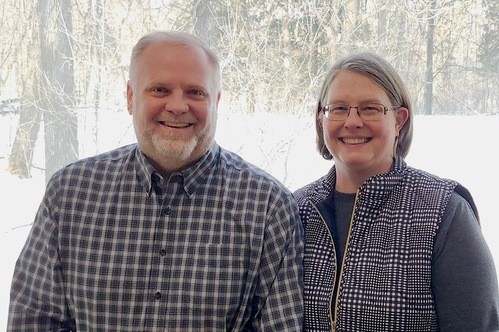
Rev. Mark Nienow
I planted, Apollos watered, but God gave the growth. So neither he who plants nor he who waters is anything, but only God who gives the growth. He who plants and he who waters are one, and each will receive his wages according to his labor.
―1 Corinthians 3:6-8, ESV
As I think about our shared vision, I keep coming back to this passage. Our instant gratification culture does not appreciate planting and watering. However, God has always worked through planting and watering seeds of faith. It is God alone who gives the growth. Those seeds, when planted in good soil, end up producing 30 or 60 or 100 times what was sown. Our shared vision is about how we can be good soil for the Lord to create growth.
The Church faces challenges from without and from within, threats to the planting and watering of seeds of faith. It has faced challenges through its entire existence, and there is only one reason it hasn’t crumbled under their weight. That reason is Christ alone. The Church is built on the confession that Jesus is the Christ. My definition of the Shared Ministries of the CLB extends beyond the ministry departments centered in Fergus Falls to include both the churches and mission fields, and further still to each person who is a part of those churches. We have a Shared Ministry given to us by our Lord, our commission to make disciples of all nations, baptized in the name of the Father, Son, and Holy Spirit and taught to obey the teaching of Jesus. We can do this only by planting and watering.
Planting and watering happens on many different types of ground. Some ground is harder than others, some has more weeds, some has more rocks. In other words, ministry contexts are different and what is needed to plant and water in diverse contexts may be different. The soil of the Church of the Lutheran Brethren includes mission fields where the gospel is new and the challenges include producing the Word in a language that can be understood so God can do his work. It includes cities and regions where many have disregarded the gospel as outdated and irrelevant. It includes rural areas that are shrinking in population. All of these contexts have unique challenges. All of them have disciples who are already there for God to use in the work of planting and watering.
How can these disciples be enrolled, equipped, and encouraged in the work of planting and watering? How can they hear the “go” of the great commission? “Go” might mean going across the street to get to know a neighbor, going to serve the least of these in a community, or going somewhere they have never been in response to God’s call. It might mean going to prayer or giving sacrificially to support the larger work of going with the gospel. What if each congregation spent time seeking the Lord to see what new way they may be called to go together? How can leadership support, equip, and encourage them as they do?
Disciple-making results in people connected to the Head of the Church. Over the CLB’s 125-year existence, many seeds have already been planted, and God has given kingdom growth through them. The Church is always called to go to new places. Seeds are already planted and being watered for expanded church planting in North America. We have a long history of planting and watering internationally among unreached people. We need to be seeking the Lord’s call regarding new challenges to the work in Chad.
We need to best steward the disciple-making capabilities of our seminary. LBS is an existentially important ministry within the CLB. The future of our church is only as strong as the seminary is now. We must support LBS in their primary mission of training leaders for pastoral and missionary service while exploring opportunities to utilize the teaching resources of LBS to enhance other areas of disciple making. In addition, we have groups like Rooted, a strong history of Bible Camp ministries, and Hillcrest Lutheran Academy that serve to strengthen the reach of our disciple-making. We should also continue to explore how to cooperate with like-minded groups such as our brothers and sisters in the Association of Free Lutheran Congregations.
I would hope to continue the disciple making focus that President Larson has championed, seeking to help congregations own and creatively live it out in their local context as the next step of implementation. Determining how to best CALL, PARTNER, UNLEASH, and MULTIPLY is a continual process of seeking God’s wisdom and strength. This is best done in conversation with others on the Mission Team and in our congregations.
We have pastors, trained disciple-makers, in every one of the communities of disciples that are Lutheran Brethren churches. Their job is sometimes misunderstood by a consumer culture. They are not the expert who is the one to do all the work. They are there to teach and preach the Word, to “equip the saints for the work of ministry, for building up the body of Christ”, to disciple those who will go in their contexts with the best news ever. Often, the biggest obstacle to this is resistance from those who are already in the church, who seek to gain something from their involvement in the church, but are deaf to the call to go. In addition, our sin nature wants significance assigned to us, not truly Solo Dei Gloria… all glory to God, the one who alone gives growth. So we (including myself) must repent so we can get out of the way and let God work. We must continually learn not to care about getting the credit in practice, rather than just in our theological beliefs.
God has been at work through, and sometimes in spite of, the Church for 2000 years. When we see him at work bringing growth, we can and should celebrate and give him the glory. For those called to positions of authority over our family of churches, we need those who exhibit strong integrity, willingness to take risks for the sake of the gospel, and willingness to be held to a high level of accountability.
Over the next season of our Shared Ministry, I pray that we are found holding onto Jesus, honoring his Word, and telling his story in diverse contexts to an ever-changing culture. I pray there are many more people, everywhere God has placed our Church family, who are dedicated to planting and watering the seeds of the gospel and trusting God for the growth.
―1 Corinthians 3:6-8, ESV
As I think about our shared vision, I keep coming back to this passage. Our instant gratification culture does not appreciate planting and watering. However, God has always worked through planting and watering seeds of faith. It is God alone who gives the growth. Those seeds, when planted in good soil, end up producing 30 or 60 or 100 times what was sown. Our shared vision is about how we can be good soil for the Lord to create growth.
The Church faces challenges from without and from within, threats to the planting and watering of seeds of faith. It has faced challenges through its entire existence, and there is only one reason it hasn’t crumbled under their weight. That reason is Christ alone. The Church is built on the confession that Jesus is the Christ. My definition of the Shared Ministries of the CLB extends beyond the ministry departments centered in Fergus Falls to include both the churches and mission fields, and further still to each person who is a part of those churches. We have a Shared Ministry given to us by our Lord, our commission to make disciples of all nations, baptized in the name of the Father, Son, and Holy Spirit and taught to obey the teaching of Jesus. We can do this only by planting and watering.
Planting and watering happens on many different types of ground. Some ground is harder than others, some has more weeds, some has more rocks. In other words, ministry contexts are different and what is needed to plant and water in diverse contexts may be different. The soil of the Church of the Lutheran Brethren includes mission fields where the gospel is new and the challenges include producing the Word in a language that can be understood so God can do his work. It includes cities and regions where many have disregarded the gospel as outdated and irrelevant. It includes rural areas that are shrinking in population. All of these contexts have unique challenges. All of them have disciples who are already there for God to use in the work of planting and watering.
How can these disciples be enrolled, equipped, and encouraged in the work of planting and watering? How can they hear the “go” of the great commission? “Go” might mean going across the street to get to know a neighbor, going to serve the least of these in a community, or going somewhere they have never been in response to God’s call. It might mean going to prayer or giving sacrificially to support the larger work of going with the gospel. What if each congregation spent time seeking the Lord to see what new way they may be called to go together? How can leadership support, equip, and encourage them as they do?
Disciple-making results in people connected to the Head of the Church. Over the CLB’s 125-year existence, many seeds have already been planted, and God has given kingdom growth through them. The Church is always called to go to new places. Seeds are already planted and being watered for expanded church planting in North America. We have a long history of planting and watering internationally among unreached people. We need to be seeking the Lord’s call regarding new challenges to the work in Chad.
We need to best steward the disciple-making capabilities of our seminary. LBS is an existentially important ministry within the CLB. The future of our church is only as strong as the seminary is now. We must support LBS in their primary mission of training leaders for pastoral and missionary service while exploring opportunities to utilize the teaching resources of LBS to enhance other areas of disciple making. In addition, we have groups like Rooted, a strong history of Bible Camp ministries, and Hillcrest Lutheran Academy that serve to strengthen the reach of our disciple-making. We should also continue to explore how to cooperate with like-minded groups such as our brothers and sisters in the Association of Free Lutheran Congregations.
I would hope to continue the disciple making focus that President Larson has championed, seeking to help congregations own and creatively live it out in their local context as the next step of implementation. Determining how to best CALL, PARTNER, UNLEASH, and MULTIPLY is a continual process of seeking God’s wisdom and strength. This is best done in conversation with others on the Mission Team and in our congregations.
We have pastors, trained disciple-makers, in every one of the communities of disciples that are Lutheran Brethren churches. Their job is sometimes misunderstood by a consumer culture. They are not the expert who is the one to do all the work. They are there to teach and preach the Word, to “equip the saints for the work of ministry, for building up the body of Christ”, to disciple those who will go in their contexts with the best news ever. Often, the biggest obstacle to this is resistance from those who are already in the church, who seek to gain something from their involvement in the church, but are deaf to the call to go. In addition, our sin nature wants significance assigned to us, not truly Solo Dei Gloria… all glory to God, the one who alone gives growth. So we (including myself) must repent so we can get out of the way and let God work. We must continually learn not to care about getting the credit in practice, rather than just in our theological beliefs.
God has been at work through, and sometimes in spite of, the Church for 2000 years. When we see him at work bringing growth, we can and should celebrate and give him the glory. For those called to positions of authority over our family of churches, we need those who exhibit strong integrity, willingness to take risks for the sake of the gospel, and willingness to be held to a high level of accountability.
Over the next season of our Shared Ministry, I pray that we are found holding onto Jesus, honoring his Word, and telling his story in diverse contexts to an ever-changing culture. I pray there are many more people, everywhere God has placed our Church family, who are dedicated to planting and watering the seeds of the gospel and trusting God for the growth.
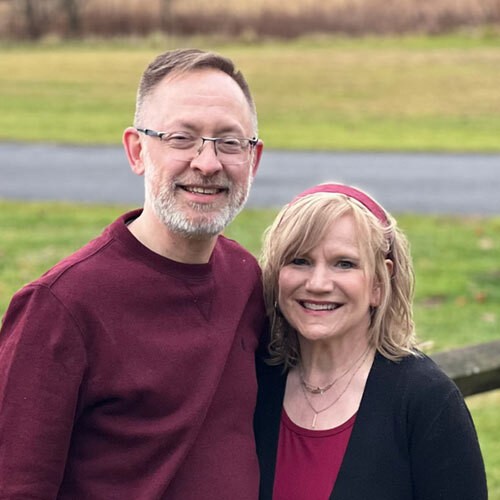
Rev. Michael Edwards
It is my chief desire that we would intentionally be a “people of the Word,” and that every missional strategy and tactic would be clearly authorized and directed by God’s Word, rightly interpreted in the light of our Creeds and Confessions. We should strongly and continually emphasize the doctrinal distinctives to which we hold and catechize as a Church. We should not water these distinctives down in order to be “attractional.” We should only entertain strategies that don’t require us to compromise our distinctives. We should not allow pragmatism or irenicism to cause us to adopt teaching that contradicts our own. We should boldly stand on and proclaim the “faith of our fathers.”
There are plenty of churches that can do baptistic, broadly evangelical, and charismatic church better than us. So what? That is not who we are. We are Lutherans who believe the Word of God, and our primary task is not church growth and multiplication. Our primary task is faithfulness. And where and when we have been most effective in efforts to grow and multiply, it has been the result of the faithful preaching of the Word of God in both Law and Gospel, empowered by the Holy Spirit, with no minimization of what makes us distinctive among Churches.
In a 1522 sermon, Martin Luther proclaimed, “I simply taught, preached, and wrote God’s Word… I did nothing; the Word did everything.” From the same sermon, “We should preach the Word, but the results must be left solely to God’s good pleasure.” The Word accomplishes what God desires and achieves his purposes. That is a solid rock foundation for all of our ministries and the outworking of them.
As taught in our Confessions, our mission is to rightly teach the gospel and administer the Sacraments through which the Holy Spirit is given, and faith is worked in those who hear the good news that God justifies those who believe that they are received into grace for Christ’s sake (Augsburg Confession V and VII). Properly speaking, this is the work of the local congregation, not the synodical administration. If we are to faithfully fulfill this mission, then our Shared Ministries must live to serve our churches, not to be served by our churches. Every leader of these ministries should be able to point daily to a way in which he or she has personally impacted a particular church, pastor, church leader, or missionary with assistance or advice. Our ministries must not only be productive but also relationally accessible in such a way that our churches view us as primary resources, not last resorts.
However, my vision for our Shared Ministries is not limited to assistance. If the CLB is to achieve the ministry goals of our Disciple-Making Church Initiative, then our ministries must also proactively challenge passivity and assumptions that hinder the accomplishment of our agreed-upon goals. Because the CLB president’s calling includes leading and speaking for the vision and mission of our Church, I would note that my leadership style tends toward the bold, direct, and decisive. I am an extravert who enjoys people and am energized by relationships. I highly value being part of a team and building teams. I am engaged by big ideas and prefer to allow other team members to develop the strategies and tactics necessary to carry out the vision. I am change-agile and expect this of others. I also anticipate that I will have much to learn about and from the directors and staffs of our ministries.
The office of the Presidency has never been something that I aspired to hold. God in his wisdom, through the invitation of the Council of Directors, has placed me as a candidate before you. I have no campaign platform. I have much experience in leadership, but no experience as a president. Acknowledging that I know what I know and don’t know what I don’t know, I humbly present a few thoughts regarding the individual arms of our Shared Ministries.
It is my view that the distinction between international and North American mission is lessening, not because of our intentions, but simply because of increased mobility. The call to go to the nations remains, but we must continually consider how to address that call when the nations are increasingly coming to us. I would like to see an increased synergy between LBIM and NAM that addresses both the need for church plants and the need for workers in local, multi-cultural contexts. Should political realities bring any international ministries to a close, we should consider future international ministries as being carried out both overseas and in North America.
In regard to the goals set for NAM, I would like to see an emphasis on disciple-making in the home. We should be looking for ways to support young fathers and mothers as they raise up good and godly families who will form the foundation of our churches and, by their faithful presence, will revitalize congregations. Women’s Ministries can have great impact here as well as they strive not only to learn the Word together but also to encourage and exhort each other to obey it as it pertains to biblical family order and its attendant blessings (Titus 2:3-5). In addition to our current church planting efforts which are often clergy-driven, we should promote and support lay-driven church planting, supported by NAM. We should re-visit our earlier understanding that church planting can be a “frontier-type” effort. When a family moves to an area in which there is no CLB church, they should consider planting one, then calling a pastor.
We need to continually raise up new pastors, and all Shared Ministries and congregations must encourage young men to serve and shape them for service. As we do so, we must clearly communicate the stringent biblical qualifications and be honest about the challenges of God’s life-long formation process of a pastor.
It is critical that LBS be protected from wolves for the sake of the sheep and be supported by our churches as a highly valued partner in our ministries and mission. The partnership between the synod and the seminary must be active and robust, promoting the health of both the CLB and LBS. Finally, it is my hope that Communications and Prayer will continue to excel at doing just that and leading us to do the same. Ultimately, we are Christ’s Church and he will work out his good purposes in and through us.
There are plenty of churches that can do baptistic, broadly evangelical, and charismatic church better than us. So what? That is not who we are. We are Lutherans who believe the Word of God, and our primary task is not church growth and multiplication. Our primary task is faithfulness. And where and when we have been most effective in efforts to grow and multiply, it has been the result of the faithful preaching of the Word of God in both Law and Gospel, empowered by the Holy Spirit, with no minimization of what makes us distinctive among Churches.
In a 1522 sermon, Martin Luther proclaimed, “I simply taught, preached, and wrote God’s Word… I did nothing; the Word did everything.” From the same sermon, “We should preach the Word, but the results must be left solely to God’s good pleasure.” The Word accomplishes what God desires and achieves his purposes. That is a solid rock foundation for all of our ministries and the outworking of them.
As taught in our Confessions, our mission is to rightly teach the gospel and administer the Sacraments through which the Holy Spirit is given, and faith is worked in those who hear the good news that God justifies those who believe that they are received into grace for Christ’s sake (Augsburg Confession V and VII). Properly speaking, this is the work of the local congregation, not the synodical administration. If we are to faithfully fulfill this mission, then our Shared Ministries must live to serve our churches, not to be served by our churches. Every leader of these ministries should be able to point daily to a way in which he or she has personally impacted a particular church, pastor, church leader, or missionary with assistance or advice. Our ministries must not only be productive but also relationally accessible in such a way that our churches view us as primary resources, not last resorts.
However, my vision for our Shared Ministries is not limited to assistance. If the CLB is to achieve the ministry goals of our Disciple-Making Church Initiative, then our ministries must also proactively challenge passivity and assumptions that hinder the accomplishment of our agreed-upon goals. Because the CLB president’s calling includes leading and speaking for the vision and mission of our Church, I would note that my leadership style tends toward the bold, direct, and decisive. I am an extravert who enjoys people and am energized by relationships. I highly value being part of a team and building teams. I am engaged by big ideas and prefer to allow other team members to develop the strategies and tactics necessary to carry out the vision. I am change-agile and expect this of others. I also anticipate that I will have much to learn about and from the directors and staffs of our ministries.
The office of the Presidency has never been something that I aspired to hold. God in his wisdom, through the invitation of the Council of Directors, has placed me as a candidate before you. I have no campaign platform. I have much experience in leadership, but no experience as a president. Acknowledging that I know what I know and don’t know what I don’t know, I humbly present a few thoughts regarding the individual arms of our Shared Ministries.
It is my view that the distinction between international and North American mission is lessening, not because of our intentions, but simply because of increased mobility. The call to go to the nations remains, but we must continually consider how to address that call when the nations are increasingly coming to us. I would like to see an increased synergy between LBIM and NAM that addresses both the need for church plants and the need for workers in local, multi-cultural contexts. Should political realities bring any international ministries to a close, we should consider future international ministries as being carried out both overseas and in North America.
In regard to the goals set for NAM, I would like to see an emphasis on disciple-making in the home. We should be looking for ways to support young fathers and mothers as they raise up good and godly families who will form the foundation of our churches and, by their faithful presence, will revitalize congregations. Women’s Ministries can have great impact here as well as they strive not only to learn the Word together but also to encourage and exhort each other to obey it as it pertains to biblical family order and its attendant blessings (Titus 2:3-5). In addition to our current church planting efforts which are often clergy-driven, we should promote and support lay-driven church planting, supported by NAM. We should re-visit our earlier understanding that church planting can be a “frontier-type” effort. When a family moves to an area in which there is no CLB church, they should consider planting one, then calling a pastor.
We need to continually raise up new pastors, and all Shared Ministries and congregations must encourage young men to serve and shape them for service. As we do so, we must clearly communicate the stringent biblical qualifications and be honest about the challenges of God’s life-long formation process of a pastor.
It is critical that LBS be protected from wolves for the sake of the sheep and be supported by our churches as a highly valued partner in our ministries and mission. The partnership between the synod and the seminary must be active and robust, promoting the health of both the CLB and LBS. Finally, it is my hope that Communications and Prayer will continue to excel at doing just that and leading us to do the same. Ultimately, we are Christ’s Church and he will work out his good purposes in and through us.