
2026 Presidential Nominees - Question 2
Question #2
What does the Church of the Lutheran Brethren’s vision to be a Disciple-Making Church mean to you?
Rev. Michael Edwards

Disciple-making has been the driving motivator of our church’s mission from our beginning. Where and when disciple-making has been most effective, it has been a result of the uncompromising preaching of the Word of God in its fullness, empowered by the Holy Spirit, through the ministries of interdependent congregations and believers who share a confession of faith. Faithful people of all ages, but especially young disciples are looking for the bold preaching of biblical truth, and faith practices set apart from culture. We will “unleash” new leaders as we teach, practice, and celebrate what makes the CLB distinct among churches. As we engage this generation, we must catechize them well, have discipling relationships with them, and proactively give them opportunities to serve and lead, under the guidance of elder and wiser disciplers.
The vision is the Lord’s and given in Scripture. Our ministry should include honest, direct encouragement and exhortation according to the Word of God, not only as it regards making disciples in the Matthew 28:19-20 sense but also in the Genesis 1:28 sense. Decline is not simply a function of a lack of evangelistic fervor. It is also a symptom of disobedience to God in regards to raising up a good and godly legacy in our families. Babies revitalize congregations. “Out of the mouth of babes and nursing infants You have ordained strength, Because of Your enemies, That You may silence the enemy and the avenger” (Psalm 8:2, NKJV). We must not only actively support congregational health but also family health. New disciples will be formed in our churches and in our homes. As these disciples are called to serve in existing ministries and envision new mission opportunities and work to establish them, we must boldly and substantially invest both financial and people resources in them, entrusting the work to our Lord in prayer and thanksgiving.
The vision is the Lord’s and given in Scripture. Our ministry should include honest, direct encouragement and exhortation according to the Word of God, not only as it regards making disciples in the Matthew 28:19-20 sense but also in the Genesis 1:28 sense. Decline is not simply a function of a lack of evangelistic fervor. It is also a symptom of disobedience to God in regards to raising up a good and godly legacy in our families. Babies revitalize congregations. “Out of the mouth of babes and nursing infants You have ordained strength, Because of Your enemies, That You may silence the enemy and the avenger” (Psalm 8:2, NKJV). We must not only actively support congregational health but also family health. New disciples will be formed in our churches and in our homes. As these disciples are called to serve in existing ministries and envision new mission opportunities and work to establish them, we must boldly and substantially invest both financial and people resources in them, entrusting the work to our Lord in prayer and thanksgiving.
Rev. Mark Nienow
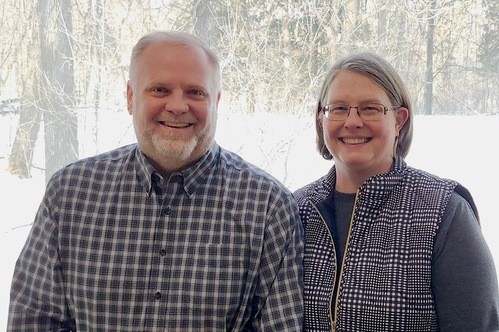
I love that our family of churches is focused on being a Disciple-Making Church. This is, of course, rooted in the Great Commission, so in that sense it is Jesus’ idea. However, looking at all the expressions of Christianity out there, it seems an intentional focus on this is not a given. Disciple-Making Church keeps the main thing in front of us. A disciple is someone who learns from Jesus. To be a disciple-maker, we must first be disciples ourselves. A disciple-making church needs everyday disciples to make it happen; everyday people who follow Jesus every day. That means knowing him as the way, the truth, and the life, the One who came and died for our sin, whose mercy and grace lead us to repentance and faith. It means having the humility to learn from him and not pretend we know everything or can figure out how to follow him on our own. We learn from him how to share what it means to know him through the gospel and help others learn how to follow Jesus. This is disciple-making. It looks like parents teaching their kids to pray, engaging our neighbors in friendship and praying for opportunities to point them to Jesus, walking with youth through their teen years, reminding them of God’s great love for them and giving them a strong foundation on their way to learning to “observe everything I have commanded you,” as Jesus tells us in the Great Commission. It looks like coming alongside people in the challenges and triumphs of life with compassion and good news that the world cannot provide.
Within our family of churches, disciple-making happens at three levels: individual, congregational, and corporate. In a sense, all disciple-making is individual, life on life. To truly be a disciple-making church, followers of Jesus seek to be used where they are to disciple others, to help them learn from Jesus. What would happen if every believer had one person they were intentional about discipling? I pray we find out. The second level is congregational, a front-line group effort in the local church. This does not replace the individual, but encourages and facilitates it. The third is corporate, a family of churches coming together to do what individual churches cannot do in developing resources, events, and sending strategies such as equipping pastors, missionaries, church planters, elders, and others, that ultimately support individual and congregational level disciple-making. Those called to serve at this level are tasked to encourage, equip, resource and celebrate disciple-making. As we lean into what God is calling us to at all three levels, I am excited to see how he will work in and through us.
Within our family of churches, disciple-making happens at three levels: individual, congregational, and corporate. In a sense, all disciple-making is individual, life on life. To truly be a disciple-making church, followers of Jesus seek to be used where they are to disciple others, to help them learn from Jesus. What would happen if every believer had one person they were intentional about discipling? I pray we find out. The second level is congregational, a front-line group effort in the local church. This does not replace the individual, but encourages and facilitates it. The third is corporate, a family of churches coming together to do what individual churches cannot do in developing resources, events, and sending strategies such as equipping pastors, missionaries, church planters, elders, and others, that ultimately support individual and congregational level disciple-making. Those called to serve at this level are tasked to encourage, equip, resource and celebrate disciple-making. As we lean into what God is calling us to at all three levels, I am excited to see how he will work in and through us.